St. Lucie County
Port St. Lucie
Spacious, affordable, and growing; newer suburban living with room to breathe.
About Port St. Lucie
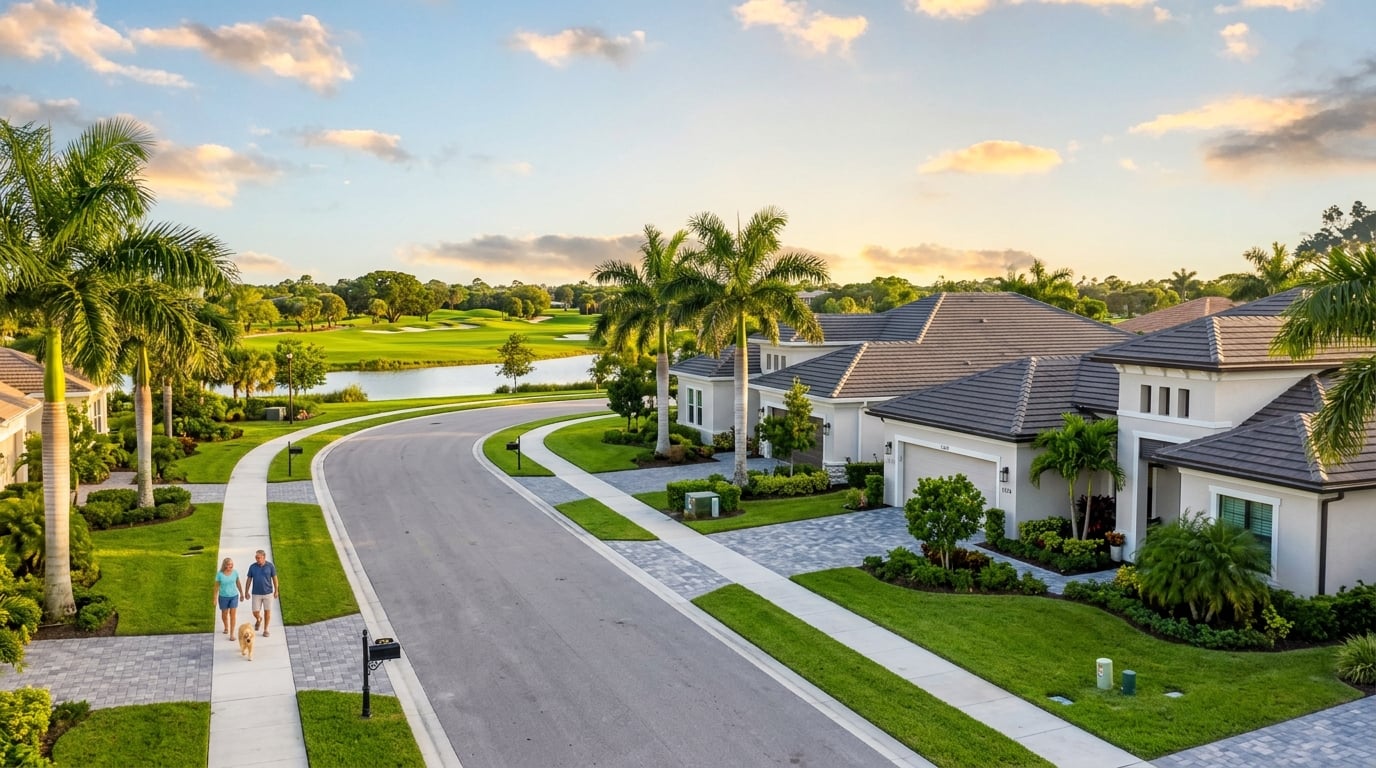
One of Florida’s fastest-growing cities, Port St. Lucie offers newer, attainably priced homes, abundant golf, and a family-first suburban feel along the Treasure Coast. A top landing spot for buyers priced out of the tri-county core.
Livability Scores
32/100
Walk Score
85/100
Safety Score
80/100
School Score
Key Amenities
Living in Port St. Lucie
What to expect once the boxes are unpacked.
What day-to-day life feels like
Daily life in Port St. Lucie feels suburban, spread out, and pretty low-key. Most mornings are a car-based routine: school drop-offs, coffee runs, gym stops, and errands across newer shopping corridors rather than a compact downtown. You see a lot of families, retirees, golfers, and people working from home, especially in the more recently built neighborhoods. Weekdays are usually quiet outside of the main roads, with traffic picking up at school start and end times. On weekends, people tend to head to ballgames, golf courses, parks, or over to the coast for beach time. The city keeps growing, so there is a steady amount of construction and new development, but it still feels calmer and roomier than the denser South Florida core.
Who it suits
Port St. Lucie suits households that want newer homes, more space, and a more predictable suburban routine. Young families often like it for the schools, parks, and relatively straightforward neighborhood living. Retirees and near-retirees tend to appreciate the quieter pace, golf access, and single-story housing options. Remote workers can do well here if they do not need a walkable urban scene. It is a better fit for people who are comfortable driving and do not mind less nightlife. If you want a dense city center, lots of late-night activity, or a very short commute to a major job hub, you may be happier elsewhere.
Getting around
Port St. Lucie is very much a driving city. I-95 is the main regional spine, with the Florida's Turnpike also serving the area for longer trips. US-1 is useful for getting along the coast, but most daily life still happens by car. You will want your own vehicle for work, school, errands, and beach trips. Rush hour is real but usually manageable compared with the big metro counties to the south; the worst slowdowns are on commuter corridors and around school zones. If you need DMV-type errands, the Walton Road office is close enough to be easy. For airport runs, Palm Beach Intl is a long drive, so plan ahead.
Groceries and errands
The grocery routine is practical rather than glamorous. Publix is the default stop for many residents, with other common choices depending on your budget and shopping style. You will also find big-box options for stock-up trips, plus some specialty and ethnic markets if you want more variety. Because the city is spread out, many people combine groceries with other errands and drive a few miles rather than walking in. A weekly shop is usually a car trip, not a quick stroll. If you want a very specific specialty item, you may end up heading toward larger nearby retail areas instead of finding it right around the corner.
Weekends and things to do
For weekends, Port St. Lucie leans toward outdoorsy, family-friendly, and sports-oriented plans. Clover Park is a big local draw when the Mets are in spring training mode, and PGA Village is a major golf anchor. Botanical Gardens and Riverwalk give you easier in-town options for a walk, a quiet outing, or a casual afternoon. When you want the beach, Hutchinson Island is close enough for a day trip without turning it into a full road adventure. Downtown Fort Pierce is also nearby if you want a different dining and waterfront feel than the newer suburban parts of Port St. Lucie. The scene is not a nightlife city, but it does give you enough for steady weekend variety.
The honest tradeoffs
The biggest tradeoff is that the space and affordability come with a more car-dependent, less walkable lifestyle. If you are used to being able to walk to restaurants, bars, or transit, Port St. Lucie will feel spread out. Summer heat and humidity can make even short errands feel draining. Like much of coastal South Florida, you also need to think about hurricanes, heavy rain, and insurance costs, especially if you are looking at newer construction or a home in a managed community with HOA fees. The city is growing quickly, so some areas still feel like they are in the middle of being built out.
How far is everything?
Real driving distances from Port St. Lucie, measured door-to-door on actual routes. Traffic will change the clock — treat these as an off-peak baseline.
| Destination | Distance | Drive |
|---|---|---|
| Palm Beach Intl (PBI) | 49.4 mi | 61 min |
| Downtown Fort Pierce | 16.1 mi | 23 min |
| Tradition Square | 7.6 mi | 14 min |
| Hutchinson Island beaches | 19.9 mi | 35 min |
| Orlando Intl (MCO) | 117.5 mi | 135 min |
Your first 30 days in Port St. Lucie
The paperwork nobody warns you about, and where to actually go for it in St. Lucie County.
30 days
to get your Florida driver license once you establish residency
10 days
to title and register your vehicle under Florida statute
March 1
homestead exemption deadline for your first qualifying year
Driver license
The St. Lucie County Tax Collector handles driver licenses and motor vehicle services together at all three of its offices.
Appointments run 9:00 a.m.–2:00 p.m., then walk-ins are taken 2:30 p.m.–5:00 p.m. Driver license service ends at 4:30 p.m., written tests stop at 3:30 p.m., and road tests are appointment-only.
Closest office to Port St. Lucie: Walton Road (Port St. Lucie) — about 7 minutes (3.8 mi) by car.
- Walton Road (Port St. Lucie) — 1664 SE Walton Rd, Port St. Lucie, FL 34952Driver license, tags, titles
- Tradition (Port St. Lucie) — 10264 SW Village Parkway, Port St. Lucie, FL 34987Driver license, tags, titles
- Fort Pierce — 2300 Virginia Avenue, Fort Pierce, FL 34982Driver license, tags, titles, road test
Registering your car
Same three Tax Collector offices — one stop for both your license and your plates.
All St. Lucie offices are Tax Collector–sponsored service centers, so a small service fee is added on top of state fees.
Florida is a no-fault state, so you need a Florida policy with at least $10,000 in personal injury protection and $10,000 in property damage liability before you can register — an out-of-state policy will not work. Budget for the one-time $225 new-registration fee on top of title and plate costs, and expect a VIN verification if the car has never been inspected in Florida.
Registration details and formsUtilities and services
- Electricity: FPL serves most of the county; Fort Pierce Utilities Authority covers the city of Fort Pierce.
- Water & sewer: Port St. Lucie Utility Systems and FPUA are the main providers — some outlying homes are still on well and septic.
- Internet: Xfinity and AT&T are widely available, and newer Tradition-area builds are typically wired for fiber.
St. Lucie County contracts curbside trash, recycling and yard-waste pickup, with schedules posted by address on the county site.
Homestead, schools and voting
- If the home is your primary residence, file for the homestead exemption by March 1 — it lowers your taxable value and caps how fast it can rise. St. Lucie County Property Appraiser (homestead exemption)
- Enrollment runs through St. Lucie Public Schools. Have proof of address, immunization records and a birth certificate ready.
- Register to vote at least 29 days before an election. You can do it at the same time you change your license.
Office hours, addresses and fees change. Confirm on the official site before you make the trip. This is general information, not legal or tax advice.
Location
Moving to Port St. Lucie: common questions
Practical answers for people relocating to Port St. Lucie, St. Lucie County.