Broward County
Fort Lauderdale
Breezy, nautical, and lively; beaches and canals meet a growing downtown.
About Fort Lauderdale
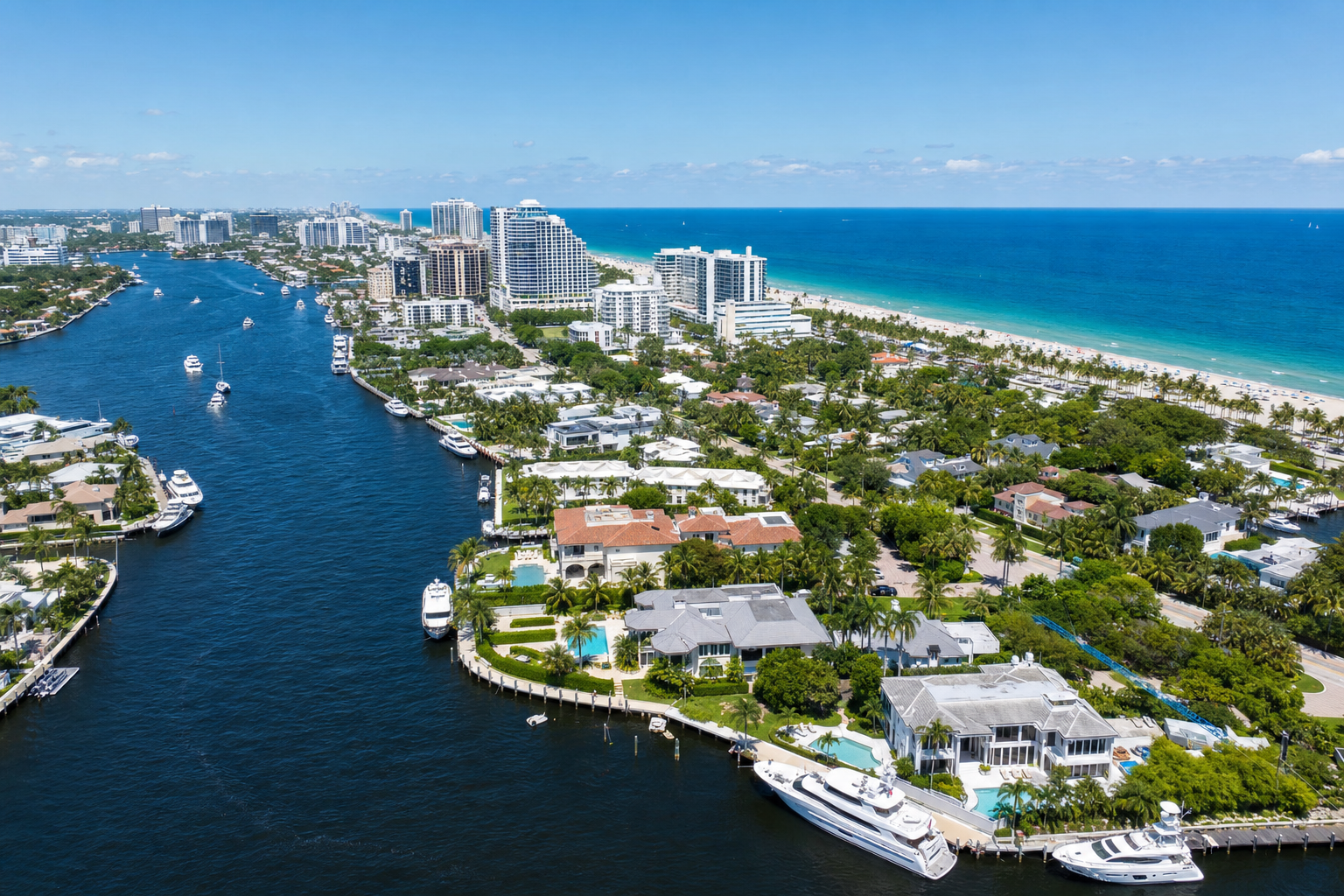
Known as the “Venice of America,” Fort Lauderdale pairs miles of beaches and canals with a revitalized, walkable downtown and a thriving boating culture. Great for water lovers and urban professionals.
Livability Scores
66/100
Walk Score
72/100
Safety Score
76/100
School Score
Key Amenities
Living in Fort Lauderdale
What to expect once the boxes are unpacked.
What day-to-day life feels like
Fort Lauderdale feels active most days, with a mix of beach life, marina traffic, downtown workers, and people who build their routines around water and dining out. Mornings are often quieter, especially away from the beach, with joggers, dog walkers, cyclists, and commuters heading toward Las Olas or the business district. By late afternoon, the city gets busier and more social, especially near the canals, restaurants, and waterfront corridors. Weekends usually mean beach time, boating, brunch, or hopping between bars and dinner spots. Some neighborhoods are calm and residential, while others stay lively into the evening, so daily life can feel very different depending on where you live.
Who it suits
This city suits people who want an urban coastal lifestyle and are comfortable with a little bustle. Boaters, remote workers, young professionals, and couples who like going out will usually find a lot to enjoy. Retirees who want warm weather, services nearby, and easier access to the beach can also do well here. Families may be happy in the right neighborhood, but those wanting a quiet, inland suburban feel may prefer farther-west Broward or a less tourist-heavy city. If you want low-key evenings, minimal traffic, and big lots, this probably will not feel as relaxed as you want.
Getting around
Fort Lauderdale is a driving city first, even though some parts are fairly walkable. I-95 is the main north-south spine, and US-1 is important for local trips and access along the coast. Brightline also serves the area if you want rail to Miami or farther north, but most day-to-day errands still happen by car. Traffic can be heavy in rush hour, especially near downtown, the beach, and major bridges. You can live without a car if you stay very central, but most residents still rely on one. Getting to Fort Lauderdale–Hollywood Intl is about 6.4 miles, around 16 minutes by car.
Groceries and errands
Groceries are straightforward but usually car-based. Publix is the default stop for most weekly shopping, with additional options like Whole Foods, Trader Joe's, Aldi, Winn-Dixie, and Costco depending on how far you want to drive. You will also find Latin and Caribbean markets in the broader area for more specialized items. If you live near downtown or the beach, you may still end up driving a bit for a full weekly stock-up, especially for larger stores or bulk purchases. Smaller top-up trips are easier in central neighborhoods than in more spread-out parts of the city.
Weekends and things to do
For weekends, the big draws are the beach, the Intracoastal waterways, and the downtown dining and nightlife scene around Las Olas Boulevard. Fort Lauderdale Beach is about 3.1 miles away, around 9 minutes by car, so it is easy enough for a spontaneous beach day. Boating is part of the local rhythm, whether you own a boat or just spend time around marinas and waterfront restaurants. You also have arts and dining options close to downtown, plus easy access to bigger shopping and entertainment elsewhere in Broward. If you want a city that mixes sand, canals, and a lively center, this is the appeal.
The honest tradeoffs
The biggest downsides are traffic, heat, and the cost of living that comes with a desirable coastal market. Beach-adjacent areas can get crowded in season, and weekend congestion around downtown and the waterfront is real. Flooding and hurricane exposure are part of life in South Florida, especially in lower-lying or canal-adjacent areas, so insurance and preparedness matter. HOA fees can also be a factor in condo-heavy neighborhoods. Walkability is better than in many South Florida cities, but it is still uneven, and you will likely depend on a car for many errands.
How far is everything?
Real driving distances from Fort Lauderdale, measured door-to-door on actual routes. Traffic will change the clock — treat these as an off-peak baseline.
| Destination | Distance | Drive |
|---|---|---|
| Fort Lauderdale–Hollywood Intl (FLL) | 6.4 mi | 16 min |
| Downtown Fort Lauderdale | 0 mi | 0 min |
| Fort Lauderdale Beach | 3.1 mi | 9 min |
| Sawgrass Mills | 13.8 mi | 28 min |
| Downtown Miami | 27.9 mi | 40 min |
| Miami Intl (MIA) | 33 mi | 53 min |
Your first 30 days in Fort Lauderdale
The paperwork nobody warns you about, and where to actually go for it in Broward County.
30 days
to get your Florida driver license once you establish residency
10 days
to title and register your vehicle under Florida statute
March 1
homestead exemption deadline for your first qualifying year
Driver license
Florida Highway Safety and Motor Vehicles (FLHSMV) runs driver license offices directly in Broward — these are separate from the offices that handle tags and titles.
Appointments are strongly recommended and are booked through the FLHSMV site. Walk-ins are accepted but wait times are long. Driver license offices are closed weekends.
Closest office to Fort Lauderdale: Lauderdale Lakes — about 16 minutes (7.6 mi) by car.
- Lauderdale Lakes — 3718-3 W. Oakland Park Blvd, Lauderdale Lakes, FLDriver license, REAL ID, written exam, road test
- Margate — 1135 Banks Road, Margate, FLDriver license, REAL ID, CDL/HazMat
- Pembroke Pines — 8001 Pembroke Road, Pembroke Pines, FLDriver license, REAL ID, CDL/HazMat
- Pompano Citi Centre — 1955 Federal Hwy, Unit J209, Pompano Beach, FLDriver license, REAL ID, CDL/HazMat
- Sunrise — 3511 N Pine Island Road, Sunrise, FLDriver license, REAL ID, written exam, road test
Registering your car
Tags, titles and registration are handled at separate motor vehicle service centers — several are Tax Collector–sponsored, which adds a small service fee.
Motor vehicle centers sit in Coral Springs, Fort Lauderdale, Hollywood, Plantation, Weston and Deerfield Beach. Do not go to a driver license office for a tag — they will send you away.
Florida is a no-fault state, so you need a Florida policy with at least $10,000 in personal injury protection and $10,000 in property damage liability before you can register — an out-of-state policy will not work. Budget for the one-time $225 new-registration fee on top of title and plate costs, and expect a VIN verification if the car has never been inspected in Florida.
Registration details and formsUtilities and services
- Electricity: FPL serves nearly all of Broward — set up service online before closing or move-in day.
- Water & sewer: Billed by your city, not the county, so the provider changes from town to town.
- Internet: Xfinity and AT&T Fiber cover most of the county; fiber availability varies street by street.
Trash and recycling are city-run in Broward, so pickup days and bulk-pickup rules are set by your municipality rather than the county.
Homestead, schools and voting
- If the home is your primary residence, file for the homestead exemption by March 1 — it lowers your taxable value and caps how fast it can rise. Broward County Property Appraiser (homestead exemption)
- Enrollment runs through Broward County Public Schools. Have proof of address, immunization records and a birth certificate ready.
- Register to vote at least 29 days before an election. You can do it at the same time you change your license.
Office hours, addresses and fees change. Confirm on the official site before you make the trip. This is general information, not legal or tax advice.
Location
Moving to Fort Lauderdale: common questions
Practical answers for people relocating to Fort Lauderdale, Broward County.